“South Providence has become a dumping ground for industries no one else wants. When health concerns are silenced and data is pushed aside, it tells us that our lives are treated as less valuable.”
About the Port of Providence
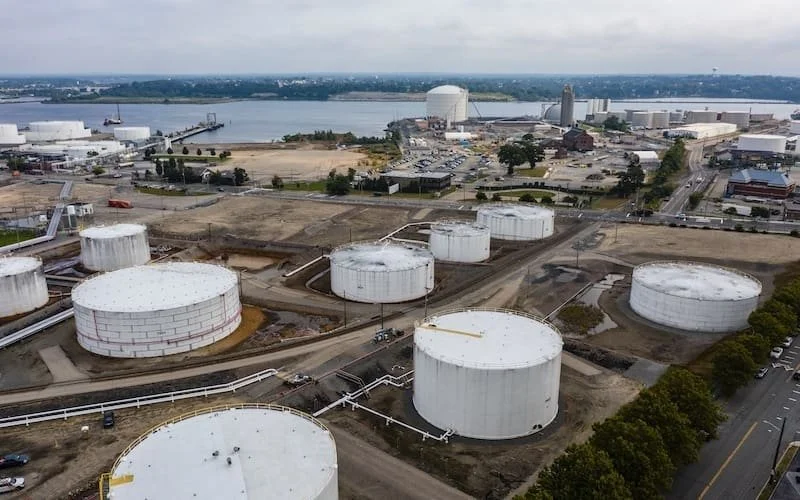
The Port of Providence has transformed over nearly 400 years—from a colonial trading hub for the slave trade to a destination for immigrants to an industrial port for petroleum, chemicals, and renewable energy. Throughout its history, the port has been shaped by a main tension: economic interests driven by powerful families and corporations versus the rights and health of communities.
Today, the Port of Providence is one of only two deep-water ports in New England and the region's second-busiest after Boston, serving a population of more than 1 million people in Rhode Island, northeastern Connecticut, and southeastern Massachusetts. Ships from Central and South America, Europe, East Asia, Russia, Africa, Australia and New Zealand bring products through the deep water channel.
-
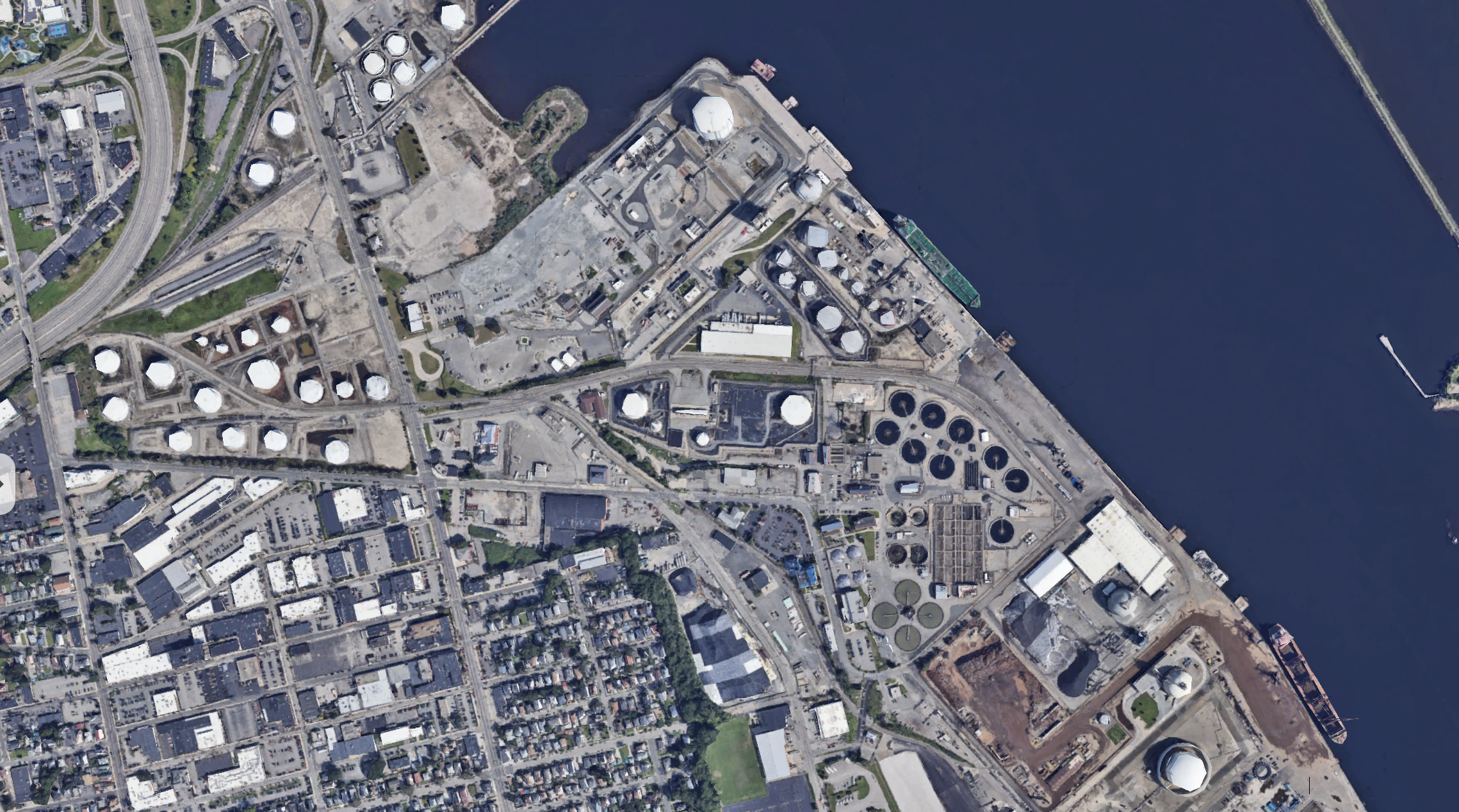
The Port of Providence includes land on both sides of the Providence River:
In Providence: from the Fox Point Hurricane Barrier south along Allens Avenue to Fields Point and the Save the Bay Center.
In East Providence: Port properties include Capital Terminal and the ExxonMobil terminal
The port is about 20 miles inland, so it is more protected from the ocean, but also more vulnerable to storm surge and flooding.
-
The Port of Providence covers 135 acres and is made up of 27 parcels and 4,200 feet of docking space for ships to load or unload.
-
The City of Providence: About 60% of port land is leased from the city by ProvPort. In 1994, under Mayor Cianci, Providence created ProvPort, a private nonprofit organization and agreed to lease its port land to them for $16.4 million. This nonprofit model is very rare nationally – usually publicly-governed port authorities manage shipping networks.
Instead of paying property taxes, ProvPort gives the city a percentage of its revenue. ProvPort contracts with Waterson Terminal Services to manage the port and leases land to various tenants.
Private: 40% of port land is privately owned. Some land is owned by the companies running the facilities and other land is leased to them.
-
The Port of Providence does not handle shipping containers, but is a “bulk port” handling:
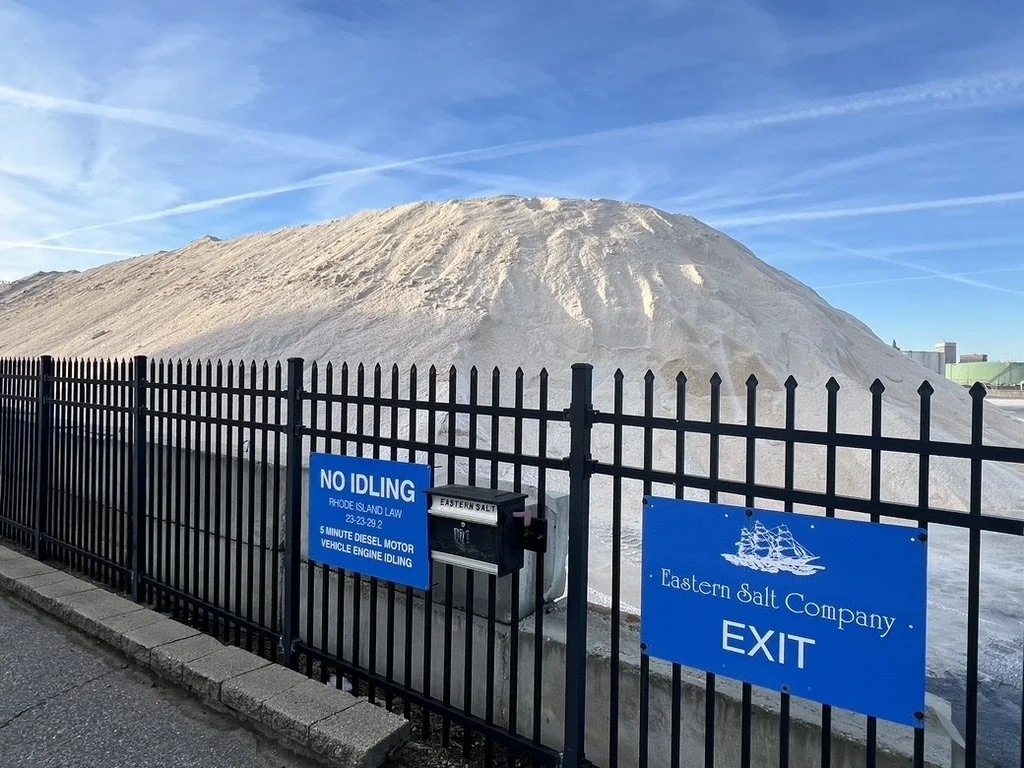
bulk cargo: loose parts loaded directly onto a ship like salt, aluminum oxide, cement, liquid propane, home heating oil
break bulk: materials bundled on pallets, in bags or crates like concrete, steel and lumber
Most of Rhode Island’s fuel and oil for heating comes through the Port of Providence and 4 facilities:
Providence: Sprague Energy and Motiva
East Providence: Exxon Mobil and Capital Terminals
The port has become a center for offshore wind energy development, with investments from companies like Ørsted for assembling wind turbines.
-
Providence’s first port was established at India Point 1680, and it grew as a center of maritime trade for 250 years.
In the 1700s and 1800s, Providence merchants participated in the transatlantic slave trade and the triangle trade connecting New England, Africa, and the Caribbean. They supplied Caribbean plantations with enslaved Africans as well as livestock, dairy, fish, candles, and lumber, and brought molasses back to Providence to produce rum. This trade enriched Providence’s wealthy white families while treating African people as commodities and fueling a brutal system of racial slavery throughout the Americas.
Providence was one of America's major ports trading directly with China. In the late 1800s coal became Providence's major import but as electricity emerged, the coal yards disappeared and were replaced by scrap metal yards. In the 1920s, Providence was ranked third along the Atlantic coast for the number of immigrants arriving at the port.
A modern state port was constructed in the deeper waters off of Allens Avenue in 1914 – the Providence River was dredged, new railroad tracks were laid, and wharves and warehouses were built along the shore.
The history of the port is part of a long history of extracting resources and labor from communities of color to fuel growth for wealthier communities.
-
The Port of Providence area is the most polluted zone in Providence County. About a dozen businesses at the port regularly appear on the EPA's list of companies that release toxic chemicals into the environment. Sources of pollution:
Diesel trucks and ships
Oil and gas storage facilities
Hot-mix asphalt plants
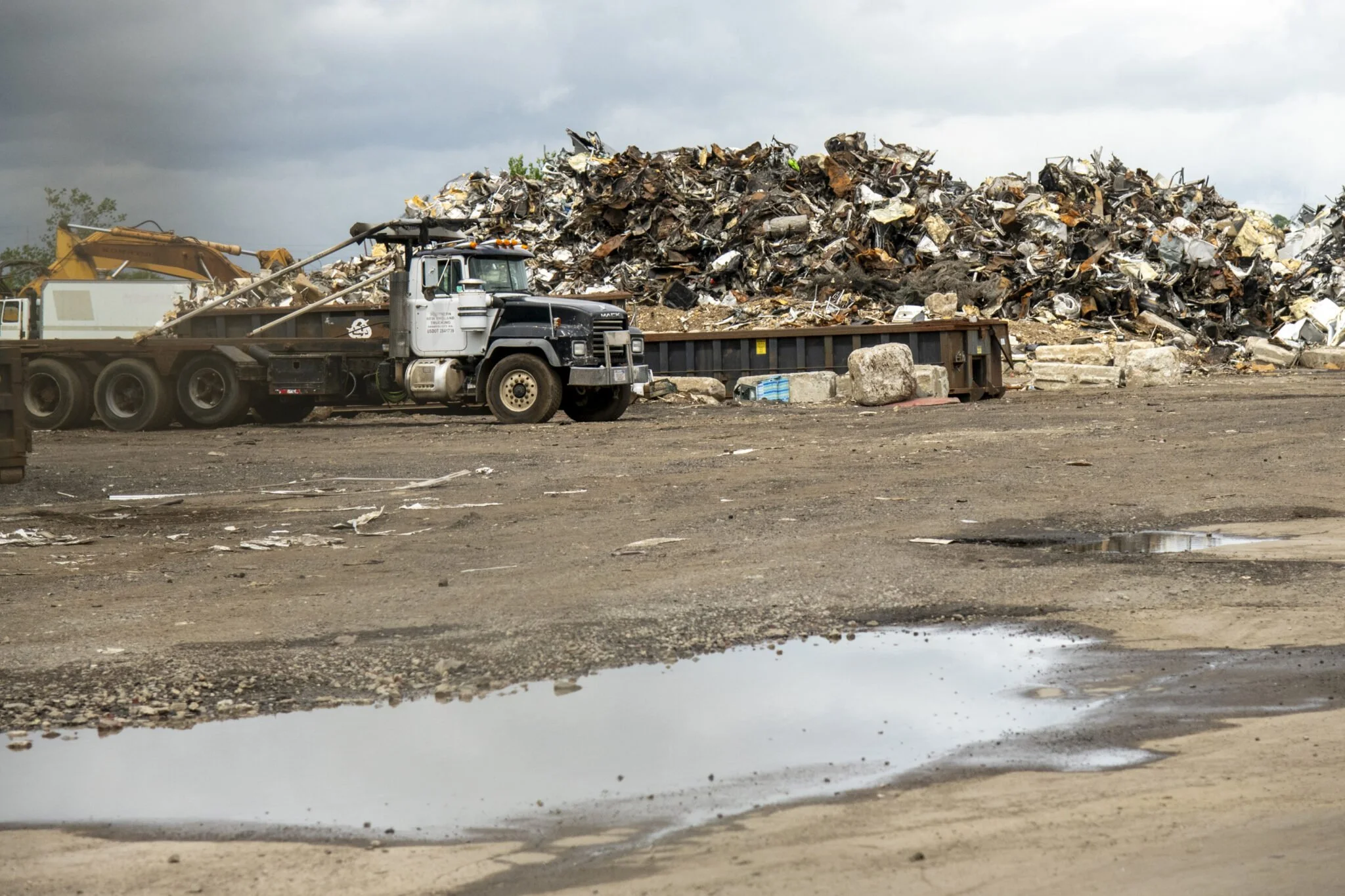
Metal recyclers
Cement processors and large industrial operations
Major Environmental Impacts include:
Air Pollution
RI Department of Environmental management’s air tests have shown that cancer-causing chemicals are released by the Port on a regular basis. More than 250 complaints about air quality from businesses on Allens Avenue were filed with the state between 2017 and 2024. Emissions from ships, diesel exhaust from trucks, chemical fires, and pervasive odors from asphalt plants and metal recyclers all contribute to poor air quality.Public Health
Residents of South Providence and Washington Park represent the majority of asthma-related emergency room visits in the stateIndustrial Fires and Toxic Releases
The port area has experienced repeated fires at facilities like the Rhode Island Recycled Metals scrapyard, sending large plumes of thick black smoke over nearby neighborhoods for hours. Toxic air releases in the Washington Park neighborhood rank among the worst in Rhode Island according to EPA tracking, and the area ranks in the 94th percentile statewide for proximity to facilities using and storing extremely hazardous materials.Water Quality
Environmental emergencies, runoff and contamination from scrapyards at port facilities threaten the health of the Providence River and Narragansett Bay.Flood Vulnerability
The port area is vulnerable to flood hazards, creating additional challenges to the safety of the neighborhood. -
Residents of South Providence and Washington Park have among the highest rates of asthma in the country and make up most of the asthma-related emergency room visits in RI.
Some research has linked the port's pollution and serious conditions like Kawasaki Disease, which has been associated with exposure to air pollution before birth.
Many residents report everyday symptoms like nausea, headaches, and tiredness, tied to the constant smell of burning, asphalt, and tar around their homes.
Researchers from Emory University recently published data linking air pollution to an increased risk of Alzheimer’s disease.
-
The Port of Providence has experienced a documented pattern of industrial accidents including scrap metal fires, fuel tank explosions, tanker spills, train derailments and pipeline ruptures.Residents living near Allens Avenue have endured explosion after explosion, fire after fire, spill after spill — breathing toxic smoke and watching their neighborhood bear the cost of industrial negligence. What follows is just a sampling of what they've lived through over the last 10 years.
This is not a list of freak accidents. This is a pattern.
December 26, 2024: Biofuel Tank Explosion and Fire
The day after Christmas, a 3,000-gallon biofuel tank at Global Partners exploded with enough force to launch its cap into a telephone pole over 300 feet away. Witnesses described a mushroom cloud rising over the port. Black smoke blanketed the sky for miles. Investigators believe a damaged heating coil ignited biofuel vapors in what officials called an "over-pressurization event."
Read more here, here or hereJuly 10, 2024: Rhode Island Recycled Metals Fire
Flames shot more than 100 feet into the air as a scrap metal pile burned and nearly 100 firefighters, EMTs, and hazmat responders descended on the scene. Air quality monitors recorded particulate pollution spiking to five times normal levels — pollution that drifted north, choking Fox Point, Hope Street, and Pawtucket. The state Attorney General filed an emergency motion to shut the facility down, and a judge issued a temporary restraining order closing the facility. See data on the air quality impact of this fire here.
Learn more here, here or hereApril 11, 2024: Rhode Island Recycled Metals Fire (again)
Just three months earlier, the same scrapyard had sent thick black smoke through surrounding neighborhoods and flushed contaminated runoff into the Providence River. Arson was suspected. The facility was still operating.
Learn more here, hereJanuary 5, 2023: Univar Fined for Major Safety Violations
Univar Solutions USA, a national chemical distributor, agreed to pay $600,000 in fines for violating federal chemical safety standards. Inspections from 2016 and 2019 found that the company failed to follow Clean Air Act rules for handling of toxic chemicals.
Learn more here or hereMarch 8, 2021: Fire at Russian Submarine
The decommissioned Soviet submarine Juliett 484 — once a floating museum, later immortalized in a Harrison Ford film — had sunk in a storm and was being scrapped at RI Recycled Metals when it caught fire. For hours, unknown toxins poured into the air above the Providence waterfront while firefighters worked to contain the blaze.
Learn more hereOctober 3-4, 2018: Gasoline Tanker Truck Spill
A tanker truck overturned on the I-95 on-ramp and unleashed 5,500 gallons of gasoline down Allens Avenue and into the Providence River. The smell of fuel spread through surrounding homes. The spill occurred steps away from Shell, Motiva, and Univar facilities — a combustion risk that, had it ignited, could have been catastrophic. Firefighting foam compounded the contamination. Investigators noted the Allens Avenue ramp's dangerous design had caused multiple prior crashes.
Learn more here, here or hereMarch 8, 2017: Ethanol Train Derailment
A train carrying 30,000 gallons of ethanol derailed near Allens Avenue, spilling approximately 5,500 gallons of the highly flammable substance in the middle of a densely populated neighborhood — surrounded by chemical facilities that could have turned a bad spill into an inferno.
Learn more here, here or hereMarch 29, 2017: Natural Gas Pipeline Rupture
An underground high-pressure natural gas pipeline owned by Spectra Energy burst through the surface of Allens Avenue. Nearly 19 million cubic feet of natural gas — enough to heat 190,000 homes for a day — vented into the atmosphere. The rupture also released PCB contaminates into the ground. I-95 shut down in both directions. Neighbors were evacuated, the smell of gas detectable blocks away. Methane, the primary component of natural gas, is 84 times more potent than CO₂ as a greenhouse gas over a 20-year period. Investigators blamed poor excavation work.
Learn more here, here or here -
Movement Education Outdoors has a great resource sheet and a few key resources are:
RI Department of Environmental Management
Air Quality
Water Quality
Toxins
-
After community pressure, ProvPort is currently engaged in a Master Planning process to guide their growth for the next 30 years. Learn more and get involved here.